Gin Rummy rules: how to play, knock, and score
* Difficulty is our editorial read on how hard the game is to pick up — not an official rating. Player counts and deck sizes come from the game's rulebook.
Gin Rummy is a 2-player card game using a standard 52-card deck. Each player gets 10 cards and takes turns drawing and discarding, building sets and runs while trying to shrink their unmatched "deadwood" down to 10 points or less. Once it is, a player can knock and lay down their hand; hitting 0 deadwood is called going gin. The first player to reach 100 points across a full match wins.
Setup
Gin Rummy uses one standard 52-card deck, no jokers. Shuffle and deal 10 cards to each player, one at a time, alternating. The remaining cards go face-down in the middle as the stock pile, and the top card of that stock gets turned face-up beside it to start the discard pile.
There's no separate crib, kitty, or shared building area the way some other card games use. Everything either sits in a player's hand, in the stock, or on the single discard pile between them. Whoever didn't deal typically gets the option to take that first face-up discard card or pass, and the non-dealer usually goes first if they decline it.
Gameplay
Drawing and discarding
Turns alternate strictly between the two players. On your turn, draw one card, either the top of the face-down stock or the top of the face-up discard pile, then discard one card face-up onto the discard pile. That's the entire turn structure, repeated back and forth until someone knocks, goes gin, or the stock runs low enough to end the hand without a winner.
Melding your hand
The goal throughout is to arrange as much of your hand as possible into sets, three or four cards of the same rank, or runs, three or more consecutive cards in the same suit. Cards that don't fit into either shape are your deadwood, and each one carries a point value: face cards count 10 points, aces count 1 point, and number cards count their face value. Unlike some other Rummy-family games, you don't lay melds down on the table as you build them here. Everything stays hidden in hand until the moment you knock or go gin, at which point your whole hand gets revealed and counted at once.
Knocking or going gin
Once your deadwood total drops to 10 points or less, you're allowed to knock: end your turn by discarding as usual, then lay your entire hand face-up, sets and runs separated from whatever deadwood remains. Your opponent then lays their own hand down too, and gets one extra chance to lay off any of their own deadwood cards onto your exposed melds if they fit, lowering their own deadwood total before the final tally.
If your deadwood ever reaches exactly 0, every card fits a set or run, you can go gin instead of a regular knock. Going gin skips the opponent's lay-off step entirely and comes with a bigger scoring bonus, covered below.
Scoring
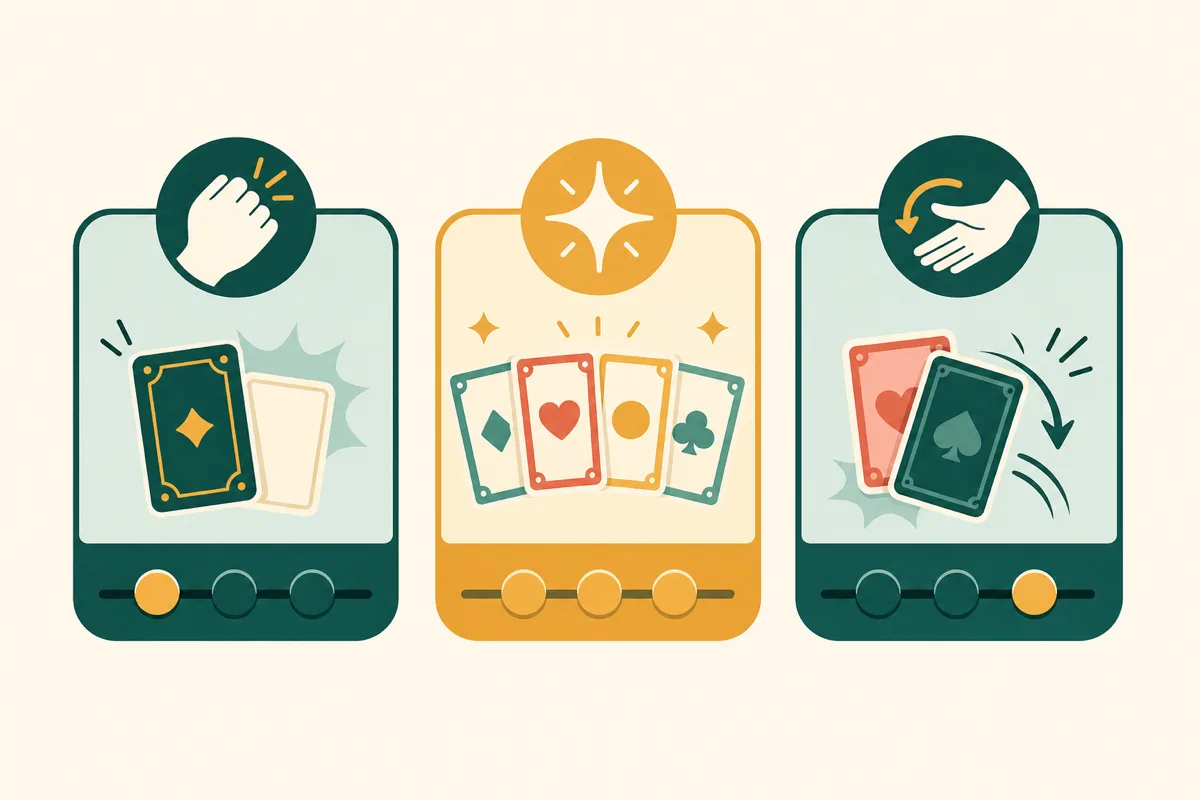
Gin Rummy's scoring hinges on which of four things happens at the end of a hand: a plain knock, a gin, an undercut on the knocker, or the stock running out before anyone acts. Cross-checked against multiple current rule sources, the figures below reflect the widely used convention, note where sources vary before you play for anything that matters.
| Outcome | Who scores | How it's calculated |
|---|---|---|
| Knock | Knocker (if their deadwood is lower) | Difference between the knocker's deadwood and the opponent's deadwood, after the opponent's lay-offs |
| Gin | Knocker (0 deadwood) | Opponent's full deadwood total, plus a bonus commonly cited as 25 points |
| Undercut / underknock | Opponent, not the knocker | If the opponent's deadwood ends up equal to or lower than the knocker's after lay-offs, the outcome flips: the opponent scores the difference plus an undercut bonus commonly cited as 25 points |
| Stock runs low, no knock | Nobody | Once the stock is down to roughly its last 2 cards with no knock or gin, the hand is a "no game" and gets redealt with no points awarded |
Across a full match, players keep adding hand-by-hand scores until someone crosses 100 points. Common practice then adds a game bonus, cited as 100 points, to the match winner's total, plus a smaller bonus for each individual hand won during the match, commonly 25 points per hand, sometimes called a box or line bonus. If the losing player never scored a single point across the whole match, some tables double the winner's final total as a shutout bonus. None of these final-tally bonuses affect who wins, they just change the final margin, so treat them as optional scorekeeping flourishes rather than something you need before your first game.
Variations and house rules
| Variant | What changes |
|---|---|
| Oklahoma Gin | The knock threshold isn't fixed at 10. Instead, the first card turned face-up sets the maximum deadwood a player can knock with that hand, using its own rank value. If that card happens to be an ace, the threshold drops to 0, meaning only a gin ends the hand |
| Hollywood Gin | A scoring format, not a rules change. Three separate running scores are tracked at once: your first win of the match counts toward game one, your second win counts toward games one and two simultaneously, and your third win counts toward all three, until each of the three games has a declared winner |
| Big Gin | If you draw an 11th card and every card melds with nothing left over, before you've even discarded, you can lay down for a bigger bonus than a standard gin. Exact bonus figures vary noticeably between rule sets, so it's worth agreeing on a number before it comes up mid-game |
FAQ
How do you knock in Gin Rummy?
Once your deadwood, the point value of cards that don't fit a set or run, drops to 10 points or less, you can end your turn by discarding as usual and then laying your whole hand face-up, separating your melds from any remaining deadwood. Your opponent lays their hand down next and may lay off matching deadwood onto your melds before the hand is scored.
What does "going gin" mean?
It means your entire hand melds into sets and runs with zero deadwood left over. Going gin skips your opponent's usual lay-off step and scores their full deadwood total plus a bonus on top, making it worth noticeably more than a regular knock.
What happens if you get undercut?
If you knock but your opponent's deadwood turns out equal to or lower than yours once they've laid off what they can, the result flips: they score the difference between the two deadwood totals instead of you, plus an undercut bonus. It's a real risk of knocking early with cards still close to the threshold rather than waiting for a stronger hand.
How many points do you need to win Gin Rummy?
Matches commonly run to 100 points, tallied hand by hand from knocks, gins, and undercuts. Once a player crosses 100, common practice adds a game bonus to their total along with a smaller per-hand bonus for every individual hand they won during the match.
Is Gin Rummy the same as regular Rummy?
No. Gin Rummy is strictly a 2-player game where nothing gets melded onto the table until a player knocks or goes gin, and scoring is built entirely around the deadwood and knock/gin/undercut bonuses described above. For how classic Rummy scoring works, including melds that go down onto the table turn by turn for 2 to 6 players, see the main Rummy rules guide.